Business Name: Heritage Glass
Address: 2005 NE Columbia Blvd, Portland, OR 97211
Phone: (503) 289-3288
Heritage Glass
Company specializing in interior glass fixtures & dividers, with a showroom for shower enclosures.
2005 NE Columbia Blvd, Portland, OR 97211
Business Hours
Monday thru Friday: 7:30am to 3:30pm
Facebook: https://www.facebook.com/profile.php?id=100087644615356
Busy locker spaces, hotel towers, college rec centers, surgical suites, and airport lounges share a persistent issue: showers take a whipping. Water never ever stops, hinges never ever rest, and cleaners hurry through on due dates that don't forgive bad detailing. As a glazier who has restored more than a couple of enclosures that failed early, I've discovered that toughness and style can coexist if you appreciate the abuse profile, choose the best hardware and glass, and believe like the upkeep personnel who will cope with the options you make. A gorgeous system that fogs, leaks, or corrodes will destroy guest experience and balloon service costs. A tank-like assembly that appears like a prison stall won't please brand name standards. The sweet area is achievable, however it takes place in the specification documentation and in the field design, not in a mood board.
What "high traffic" really suggests for shower enclosures
Traffic appears in unique ways. You have recurring cycles of heat and humidity, chemical exposure from disinfectants, and mechanical tension from rushed users, rolling carts, and aggressive cleaning routines. In a hotel with 200 keys, a single head can see 800 to 1,500 utilizes a month. In a school athletic center, a varsity group will put a stall through dozens of back-to-back cycles in a single afternoon. Commercial glass can handle that if the system represents the little, cumulative insults: micro-chips at door edges, set screws backing out under vibration, silicone joints that never completely treated since the schedule pushed turnover too fast.
Two concerns help set the tone for a long lasting design. First, who preserves it and with what chemicals? Second, what's the peak humidity and how quickly does the space leave steam? If those two answers are truthful, you can select glass, hardware, and detailing that endure both the guests and the mops.
Framed, semi-frameless, and frameless: choosing the right language for the space
Frameless looks streamlined and offers rooms, however in heavy-use spaces it's not always the best move. Fully framed systems endure misalignment, conceal gaskets that take the impact of abuse, and create a reputable water management course. Semi-frameless strikes a balance by lowering visual weight while keeping reinforcement at vital edges. Complete frameless, utilizing 3/8 inch or 1/2 inch tempered glass with precision rotates, delivers the cleanest appearance but requires a company substrate, perfectly plumb walls, and constant maintenance.
In a midscale hotel where housekeeping speed matters more than a pristine minimal appearance, a semi-frameless with low-profile headers and discreet verticals frequently strikes the mark. At high-end properties where shower and mirror lines are brand possessions, a robust frameless pivot door with constant seals can still be the right choice if the wall stopping is appropriate and the ventilation is tuned. For college centers and fitness centers, framed or heavy semi-frameless moving assemblies surpass pivots for longevity because they get rid of swing arcs that collide with benches and lockers.

Tempered vs. laminated: security, noise, and vandal resistance
Most shower enclosures use heat-tempered glass for its strength and safe break pattern. For common hotel bays, 3/8 inch tempered is the workhorse. For health club suites or extensive sliders, 1/2 inch includes tightness and reduces panel chatter. Laminated glass, while less typical in wet stalls, brings benefits in particular cases. It moistens sound, decreases vibration in high sliders, and holds together if somebody throws a toiletry basket hard enough to chip an edge. Gym with heightened vandal danger or urban boutique hotels near night life corridors occasionally spec a tempered-laminated hybrid that compromises some cost and weight to acquire security and sound control.
The trade-off is obvious in maintenance. Laminated edges require much better detailing at channels to avoid moisture from wicking into the interlayer. If you pick lam for a steam or super-humid area, you need to path and seal edges cleanly and avoid raw edge exposure. Work with a glass company that can polish and seal edges regularly, and demand mockups when the edge will sit inside a wet channel.
The quiet hero: hardware that takes a pounding gracefully
Hinges, pivots, rollers, and clamps inform the story of a shower a year after opening. If they rust, squeal, or loosen up, the best glass ends up being a liability. I always begin with metallurgy. In seaside markets or chlorinated environments, insist on 316 stainless, not 304. The distinction is the line in between "looks good for 2 years" and "looks great until the next remodelling." If you need a matte black surface, ask the supplier whether the covering is PVD, powder, or paint. PVD on stainless lasts; paint on base metals chips under standard cleaning regimes.
Weight rankings matter. If a roller is rated to 90 kilos per pair and your door panel, including manage, relaxes 45 kilos, you remain in the safe zone. If you're within 10 percent of the limit, you will be residing on service calls. For pivot hinges, I search for double seals and exchangeable bushings. For sliders, I choose trolleys with sealed bearings and easily exchangeable nylon tires over naked bearings that gather moisture and hair.
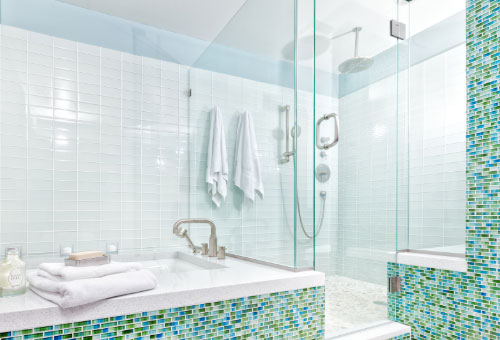
There is also an art to over-specifying a few important parts. A header or track that is 1.5 millimeters thicker than the catalog standard staggers the service curve in your favor. You might spend an extra 40 to 60 dollars per opening on hardware however you save multiples of that in avoided gos to from a glazier down the line.
Water management: where leak begins and how to avoid it
Most shower complaints are not about glass, they're about water where it should not be. Two things eliminate water management: out-of-plumb walls that break seal engagement, and threshold information that neglect the instructions the door swings. A frameless door that swings both ways reads sophisticated, however in a high-traffic center it permits splash to leave into the room and motivates users to towel-off in the damp zone. A 90-degree stop with a positive closing magnet resolves the majority of that without imposing a heavy look.
Consider the limit. A 3 to 5 millimeter slope back to the pan sounds trivial but makes a quantifiable distinction. Too high and the door binds; too shallow and the water runs. Shower panels ought to arrive on stone or tile that sheds water away from seals. I avoid raw aluminum channels on the wet side when possible, because they collect gunk and deteriorate under strong chemicals. If a channel is required for structural reasons, I prefer a completely silicone-bedded channel with weep paths pre-cut. Do not rely on installers to drill weep holes on site; specify it and examine the first unit.
Silicone is your concealed gasket. An one hundred percent neutral remedy silicone, appropriately tooled and allowed the full cure time, exceeds quick-cure hybrids in day-to-day hot cycles. Task schedules frequently press groups to install on a Friday and hand keys on a Monday. If that compresses treatment time, leakage and adhesion failures show up within weeks. Build practical remedy windows into the schedule and impose them. A small buffer now is more affordable than changing swollen subfloor later.
The glass surface area: clear finishes, textures, and long-term clarity
Guests judge a shower in 3 seconds. If the glass is foggy with tough water or engraved by chemicals, the space checks out worn out even if it's tidy. Clear protective finishes assist, but they are not magic. Factory-applied ion-exchange or silane-based coatings decrease the bond of minerals and make cleaning much easier. They also require that housekeeping prevent abrasive pads and strong acids. In metros with difficult water, the covering slows etching however doesn't remove it. I pitch finishes when the owner devotes to training personnel on compatible cleaners.
Textures have a role beyond personal privacy. Micro-textures like satin etch or cable reduce the visibility of finding in between cleansings. They also hide minor scratches that would glare on clear glass. The trade-off is light transmission and the sense of openness that premium brand names depend on. For multi-stall athletic facilities, a patterned band or gradient etch on eye-level zones keeps the space modest without turning it into a cave.
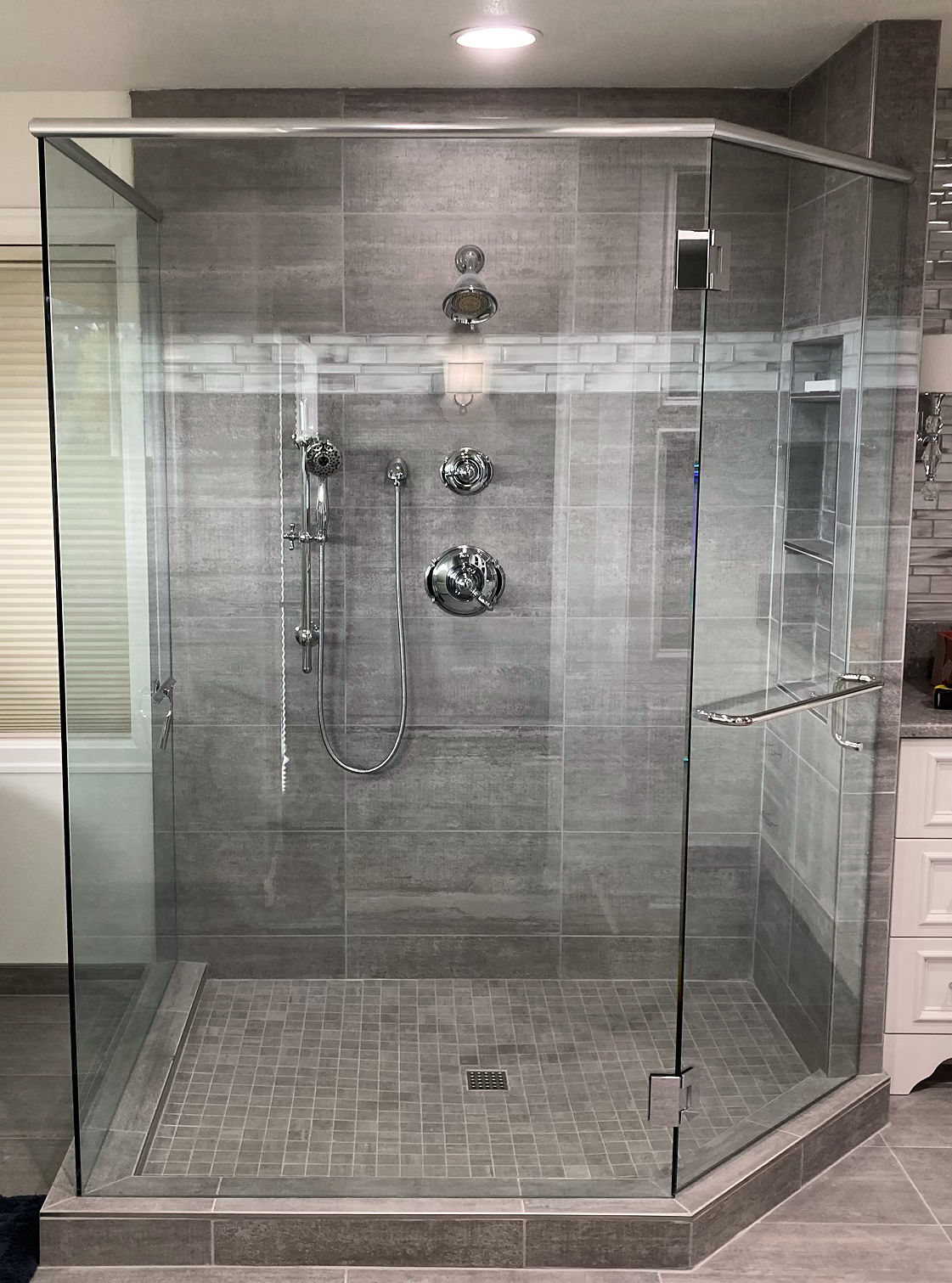
Mirror placement matters near showers. A shower and mirror assembly in close distance encourages fog migration and makes water spotting visible. If ductwork can not be improved, an easy detail like a drip edge or a modest separation reveals itself in the upkeep journal. Think of the mirror substrate too. Back-painted glass can work as a splash wall that cleans faster than grout when budget allows.
Sliding vs. swinging doors in service-driven spaces
Swinging doors feel familiar and are much easier to information, but in constrained bathrooms they trigger damage when users open them into towel hooks or vanities. Sliding systems minimize swing threats and make ADA layouts more versatile, yet they bring their own difficulties. Tracks must be available for cleaning, which indicates an upper trolley with very little lower guide intrusion. The lower guide needs to be a low-profile fin or a bonded guide, not a screw-down bracket that draws blood and traps grime.
In hotels, I favor single moving panels with a fixed lite for tubs and for tight showers, and a bypass slider for double-occupancy rooms with tub-shower combinations. In fitness and student real estate, bypass systems manage crowds much better due to the fact that you can open from either side. When the budget leans toward swinging doors, adding a door stop with a changeable bumper and a sweep that can be switched without eliminating the door saves headaches later.
Code, ADA, and the geometry that makes areas inclusive
Building codes shape the envelope before visual appeals get in the chat. Security glazing is a given, but hinge clearances, thresholds, and graspability drive hardware choice too. For ADA or comparable ease of access standards, prepare for clear openings of 32 inches minimum and keep thresholds low enough to roll over, generally a half inch or less with bevels. That changes water management method and typically requires an oversize repaired panel to block splash. Manages need to be easy to comprehend with wet hands and allow a closed-fist grip. Elegant small pulls look excellent in renderings and immediately irritate real users.
Ventilation becomes part of availability. If the wet air sticks around, surface areas slick over and develop slip dangers. Coordinate exhaust CFM and door damages early. A 3/8 inch undercut at the bathroom door and a clear path to the return changes how fast the shower enclosure dries, and a drier enclosure outlasts a wet one.
Substrates, blocking, and the "nothing fancy, everything square" rule
The best glass design dies on jagged tile. High-traffic installations need walls that are both plumb and backed with strong blocking. A frameless hinge needs bite, and tile over foam without correct blocking sets you up to fail. I request 2x6 stopping, double-studded at hinge points, and I want fasteners in solid wood, not just anchors in board. For moving systems, the header accessory must be continuous into studs or into a welded support plate in metal-stud partitions. Invest twenty minutes with the framer early and save two hours of field improvisation per unit later.
Sills are similarly important. Big format tile looks tidy however can crown or twist. A sill that is out by 3 millimeters throughout a door opening might not look like much, but it will force installers to shim hardware and will leave visible spaces at sweeps. If you can't attain a perfect slope, prioritize an uniform plane and change slope a little in the pan rather. Consistent airplanes let seals do their job.
Seal strategies that endure cleaners and cycles
Gaskets and sweeps been available in contact with both water and disinfectant. If the facility uses quaternary ammonium compounds or bleach-based cleaners, define products that tolerate them. Polycarbonate seals hold up much better than cheap vinyl, and co-extruded sweeps with a company spinal column and a soft fin preserve shape longer. Magnets should be encapsulated to resist rust. When possible, style seals that can be replaced without deglazing anything. A bottom sweep that moves into a retainer beats one that needs disassembling the door.
For steam showers or medspa suites, continuous perimeter seals matter. At the head, a transom with a great seal fixes draft and humidity loss. Keep a small vent space or a pivoting transom if the space tends to overheat. In true steam units, laminated glass and sealed hardware need precise detailing, and maintenance personnel must understand that aggressive scrubbing at seals shortens life.
Cleaning truths: what your janitor's closet is informing you
Walk the facility's janitor closets before you complete requirements. If you see harsh acids, wire pads, and unlabeled spray bottles, your finishes require to be practically bulletproof. If the personnel utilizes neutral pH cleaners and microfiber, you can be more daring with surfaces. Do not presume training will stick unless the operator commits to it. We include a one-page cleaner compatibility sheet and a quick on-site training with housekeeping whenever we install more than a lots enclosures in one property. It is not a luxury. It is insurance.
Clear coat service warranties are typically voided by the earliest cleans up. Leave a little card at the vanity with care notes if the brand authorizes it. Many boutique hotels do this tastefully, and the reduction in etched glass is noticeable within a year.
When a bath remodel fulfills commercial reality
Smaller operators in some cases approach a bath remodel as if domestic choices can scale. They can, with caveats. Residential-grade sliders frequently use lighter aluminum and plastic rollers that will not make it through a busy short-term rental residential or commercial property, not to mention a trainee dormitory. If you are bridging from residential to light commercial, choose hardware with published cycle rankings, ask for sample rollers you can dismantle, and compare the axle thickness. The difference in between a 3 millimeter axle and a 5 millimeter axle appears in month six.
Mirror and glass placement need coordination. In numerous remodels, a frameless shower runs right approximately a vanity mirror edge. That joint is a water trap if not detailed with an expose or leak. A basic 3 millimeter separation with a silicone fillet and a minor slope on the stone back towards the shower keeps black edge sneak out of the mirror. A glazier who also handles window glass replacement often understands these wetness paths because we see the very same failures at sills and frames. That cross-trade experience is important throughout design.
Case notes from the field: what survives guests, teams, and the clock
A downtown company hotel with 280 spaces originally set up 1/4 inch framed sliders to meet a tight opening date. Within nine months, rollers flattened, doors rattled, and tracks collected sludge that housekeeping might not reach. When the residential or commercial property remodelled a flooring, we replaced them with 3/8 inch glass and a heavier header, swapped to sealed-bearing trolleys, and added lift-and-clean features that let the panel hinge out for gain access to. Grievances about sticking doors come by over half, and cleaning time per system fell by approximately two minutes. The capital boost had to do with 220 dollars per opening. Repayment came within a year through reduced service calls and faster turns.
At a college rec center, pivot doors on private stalls fulfilled the designer's visual short, however the rooms were narrow. Gamers opened doors into benches and split 2 panels in three months. We reworked the design with bypass sliders, enhanced head tracks into constant stopping, and included textured glass bands for personal privacy. Zero damage in the following season, and the group personnel reported fewer puddles outside the damp zone since doors no longer swept water outward.
A store medical spa insisted on matte black hardware near a saltwater plunge. Early samples used painted mild steel beneath the surface. We promoted 316 stainless with a PVD black surface, and we doubled the finish lead time to get it right. 3 years later, with weekly salt direct exposure, the finish still checks out crisp. The extra spend per enclosure had to do with 8 to 10 percent. Cheap finishes would have forced a wholesale swap inside 2 years.
Coordination with trades: tile, mechanical, and housekeeping
The glazier is often the last in line, however the enclosure depends on work everyone else did. Agree on referral lines for plumb and level before tile starts. Approve slope in dry runs. Ask the mechanical professional for determined exhaust CFM and where it lands; a duct that dumps flow behind a soffit instead of pulling at the shower opening will leave the glass foggy and the seals continuously damp. Consist of housekeeping leads in mockups. They spot the cleansing traps designers miss, and they are more likely to protect the setup later if they had a state up front.
For commercial glass suppliers running multiple scopes on a home, coordinate deliveries so mirrors, partitions, and shower enclosures relocate series. Glass dog crates take space, and rushed staging causes scratches and chips in tight rooms. A phased floor plan with marked staging zones keeps the flow stable and lowers rework.
Style that lasts: how to make it look elevated without welcoming failure
Thin sightlines and warm finishes remain in need. You can achieve that with cautious percentage rather than vulnerable parts. Keep verticals slim however stress strong deals with that anchor the structure. Think about a split-finish technique: brushed stainless where hands satisfy metal, ornamental finishes on headers and clamps. Frosted or fluted bands provide personal privacy and visual interest while hiding splash marks at mid-height. Custom-made notches and cutouts look gorgeous, but every notch is a stress riser. If you need cutouts for benches or specific niches, round the corners, increase glass thickness, and disperse loads away from those points.
Lighting does as much as glass to offer design. Place a downlight near the repaired panel edge to make the glass sparkle and distract from necessary seals. Backpainted accent panels around niches clean quickly and tolerate cleaning chemicals better than grout-heavy mosaics.
Working with a glazier and glass company you can trust
Specifications only go so far. The best glazier comprehends sequence, sealants, and the truths of house cleaning. Ask for mockups, and not simply quite ones. Need an unit window glass replacement that gets hosed down for ten minutes and then wiped with whatever cleaner the property will actually utilize. Cycle a door a couple of hundred times if you can. A skilled glass company can also encourage on window glass replacement or shop operate in the exact same home, which typically reveals wetness courses and upkeep practices that will affect the showers. Cross-scope insight enhances the detailing.
Good partners document hardware SKUs, seal profiles, and touch-up instructions. They leave a little box of spares per flooring: sweeps, gaskets, set screws, and 2 rollers. That kit minimizes downtime when the unavoidable wear appears. They likewise support cycle counts. If a hinge is ranked for 100,000 cycles and stops working at 20,000, they will swap it without drama and change the spec.
Budgeting for the lifecycle, not just the install
The cheapest enclosure is hardly ever the least costly over 5 years. Include the cost of recaulking, roller swaps, and emergency situation service check outs to the in advance number. If you conserve 150 dollars per opening on hardware and after that call a service technician two times a year at 200 dollars per visit, you lost cash quick. Cleaning up labor is another surprise cost. If a track design adds ninety seconds per tidy, increased by everyday turns, multiplied by the number of spaces, the labor load dwarfs a modest upgrade in track design.
One owner I worked with shifted 20,000 dollars from decorative tile to updated hardware and protective coverings throughout 120 rooms. The rooms looked as excellent, and the decrease in service calls paid back the shift in less than eighteen months. That is the math that moves the needle.
A short, practical list for high-traffic success
- Confirm wall blocking and plumb conditions before tile sets. Specify 316 stainless or comparable for humid or coastal sites, and demand PVD for dark finishes. Choose 3/8 inch tempered as a baseline, bump to 1/2 inch for tall or wide panels, and think about laminated where sound or vandal resistance matters. Detail limits with a slight inward slope, favorable stops, and seals you can change without disassembly. Align cleansing procedures with coverings and surfaces, and train staff with a one-page guide.
When to go custom-made, and when to utilize a tested system
Custom work shines in flagship suites and top quality environments where the shower is a signature. You can bend glass, incorporate lighting, or drift a transom carefully to stabilize steam and temperature level. That level of craft needs patient coordination and a glazier who has done it previously. In basic rooms and institutional bays, a tested system with released test information exceeds bespoke information that no one has field-tested. Usage customized touches where they carry the brand name story, then lean on evaluated assemblies for the rest.
I have actually reconstructed more than one "design moment" that looked fantastic on opening day and failed in month 6 due to the fact that a lovely corner rested on a minimal fastener or an elegant handle ended up being a trap for cleaning up chemicals. When your task should deliver day after day, respect the cycle count, design for the mop, pick hardware like you are purchasing a tool, and let the glass do what it does finest: bring light, clarity, and calm to an area that works as tough as its guests.
Heritage Glass uses highly trained glass installation teams
Heritage Glass emphasizes exceptional customer service
Heritage Glass aims to provide competitive pricing
Heritage Glass offers plate glass and insulated window replacement for commercial projects
Heritage Glass installs showcase glass and shelves in commercial settings
Heritage Glass installs storefront aluminum frames
Heritage Glass displays past project examples in its project gallery
Heritage Glass partners with trusted glass suppliers
Heritage Glass provides free project estimates upon contact
Heritage Glass has a contact phone number for inquiries (503) 289-3288
Heritage Glass operates Monday through Friday
Heritage Glass is a commercial and residential glass installation company
Heritage Glass is located in Portland, Oregon
Heritage Glass was founded in 1970
Heritage Glass serves the Portland Metro and surrounding area
Heritage Glass specializes in commercial glass installations
Heritage Glass installs storefronts and secure glass doors
Heritage Glass provides tenant improvement glass services
Heritage Glass offers residential shower glass installation
Heritage Glass offers a broad selection of glass and hardware options
Heritage Glass has a phone number of (503) 289-3288
Heritage Glass has an address of 2005 NE Columbia Blvd, Portland, OR 97211
Heritage Glass has a website https://www.heritage-glass.com/
Heritage Glass has Google Maps listing https://maps.app.goo.gl/ZAZDjqmi5bpCQR9A8
Heritage Glass has Facebook page https://www.facebook.com/profile.php?id=100087644615356
Heritage Glass Best Glazier Award 2025
Heritage Glass earned Best Customer Service Award 2024
Heritage Glass placed Top in Custom Shower Enclosures 2024
People Also Ask about Heritage Glass
What types of glass services does Heritage Glass offer?
Heritage Glass provides both commercial and residential glass services, including installation of storefronts, secure glass doors, tenant improvements, mirrors, heavy glass, and custom shower glass enclosures
Where is Heritage Glass located and what areas do they serve?
Heritage Glass is located at 2005 NE Columbia Boulevard in Portland, Oregon and serves the Portland Metro area, including surrounding communities like Gresham, Vancouver, and Hillsboro
How long has Heritage Glass been in business?
Heritage Glass has been providing professional glass installation services since 1970, giving them over 50 years of experience in the industry
What should I expect during the glass installation process?
Heritage Glass emphasizes clear communication, competitive pricing, and professional service. Their team works closely with clients to understand project requirements and delivers high-quality installations on time and within budget
Where is Heritage Glass located?
Heritage Glass is conveniently located at 2005 NE Columbia Blvd, Portland, OR 97211. You can easily find directions on Google Maps or call at (503) 289-3288 Monday thru Friday: 7:30am to 3:30pm
How can I contact Heritage Glass?
You can contact Heritage Glass by phone at: (503) 289-3288, visit their website at https://www.heritage-glass.com/,or connect on social media via Facebook
Cully Park. Cully Park’s modern design reflects the clean lines many clients want in residential glass, commercial glass, and contemporary shower enclosures installed by professionals.